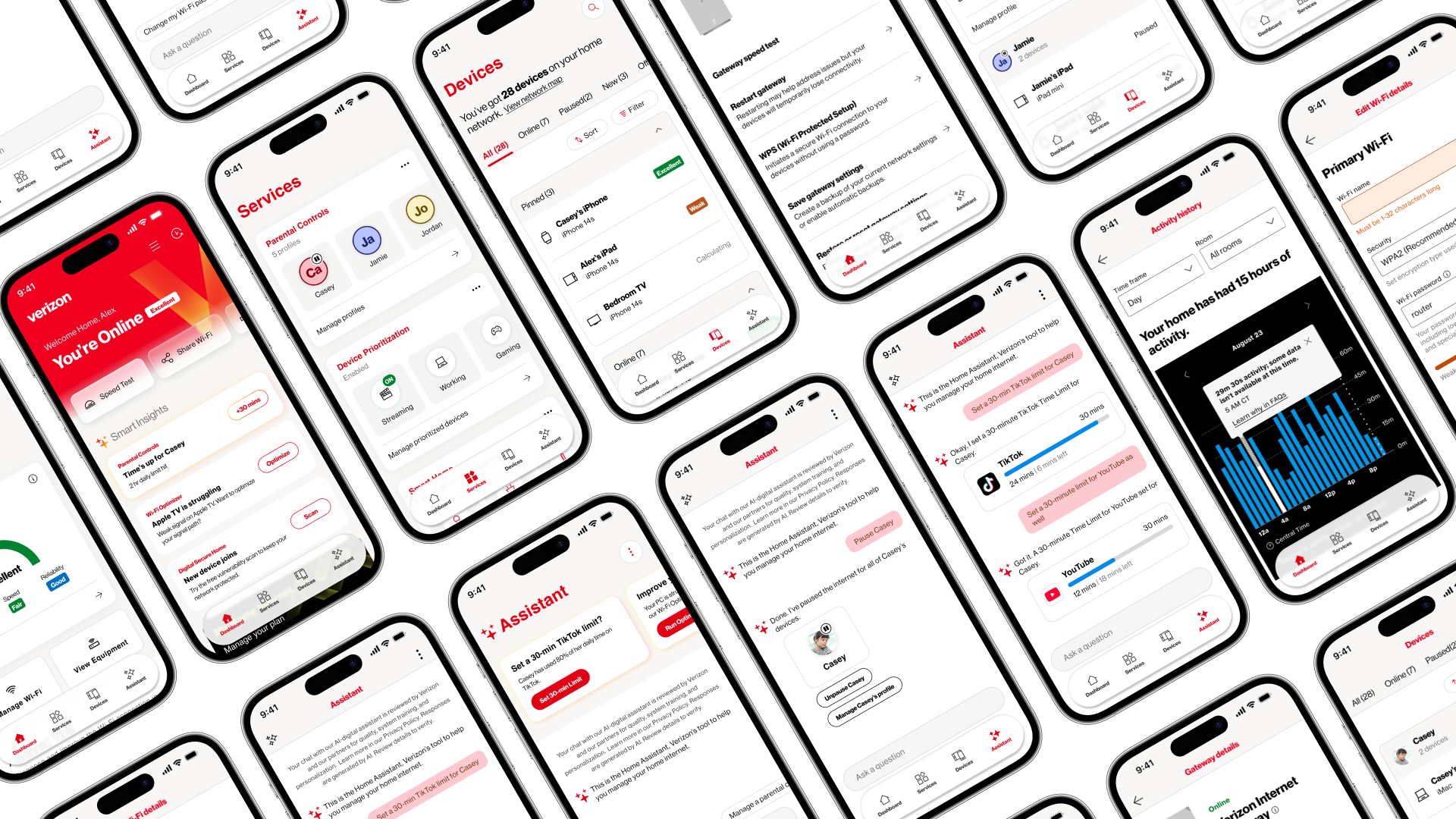
View

Verizon
Home App

Verizon · Mobile · iOS & Android · 2023–2025
Digital Product Design Design System Cross-Platform Mobile Application Smart Home / IoT Home Connectivity Intelligent Ecosystem 0–1 Product Development Digital Product Design Design System Cross-Platform Mobile Application Smart Home / IoT Home Connectivity Intelligent Ecosystem 0–1 Product Development
1M+
Customers · Launch Aug 2024
4.5★
App Store · Google Play 4.4
72%
Fewer Support Escalations
15+
Releases in 18 Months
Context

Building the machine.
Then changing its direction.

When I joined the Verizon Home App team, the challenge wasn’t only the product. The organization needed clearer structure, stronger processes, better alignment, and a more sustainable way of working. Before improving the experience, we first had to improve how the experience was built.

Once that foundation was in place, the focus shifted to a larger opportunity: redefining the role of the Home App within Verizon’s ecosystem and creating a vision for a more proactive, intelligent future.

Strategy without execution is fiction.
Execution without strategy is maintenance.

01
Chapter One · Stabilize
From Chaos to Cadence

Operational transformation. Leadership. Systems organization. This chapter is about the execution, the unglamorous, high-leverage work of turning fragmentation into infrastructure.

02
Chapter Two · Transform
From Reactive to Proactive

Product vision. Ecosystem strategy. AI experience. Household intelligence. The pacing slows here intentionally, this chapter earns the breathing room.

Jump to Chapter Two
Summary

From fragmentation to scale.

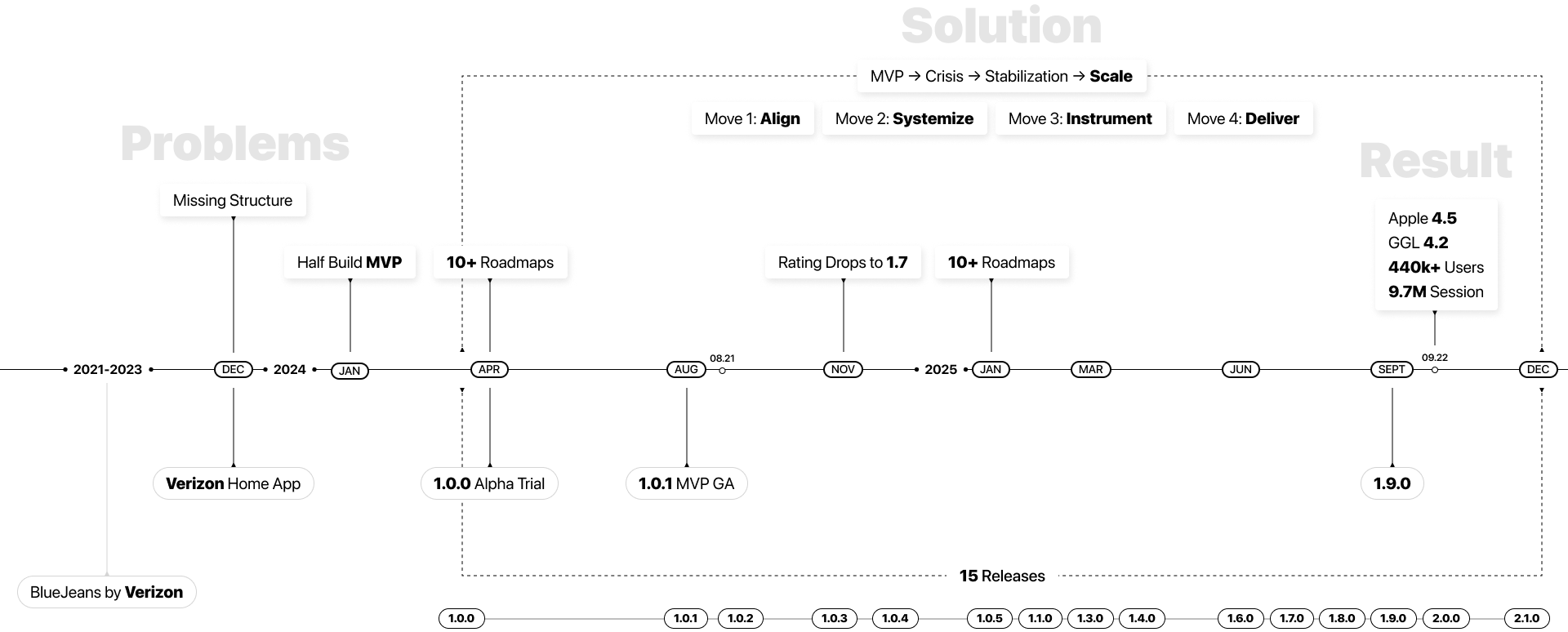
Operational transformation. Leadership. Systems thinking. Before we could improve the experience, we had to improve the system creating it. This chapter follows four strategic moves that transformed fragmented teams, competing priorities, and inconsistent processes into a scalable operating model capable of supporting long-term product growth.

Chapter One timeline
Challenge

Problem blocking value.

The challenges facing the Home App were not isolated issues. They formed a pattern. Fragmented execution slowed delivery. Misaligned priorities created competing directions. Missing customer signals made it difficult to know whether we were solving the right problems. Before the product could scale, these foundations needed to be addressed.

Fragmented Execution

Handoff gaps and missing process slowed delivery.

Fragmented Execution
  • Agency handoff with limited product context
  • Missing processes and delivery structure
  • Late feasibility reviews causing delays
Misaligned Priorities

Competing definitions of success across teams.

Misaligned Priorities
  • Competing definitions of success
  • Multiple roadmaps across teams
  • Product decisions driven by outputs instead of outcomes
Missing Customer Signals

Solutions defined before problems were validated.

Missing Customer Signals
  • Limited feedback mechanisms
  • Blind spots in user understanding
  • Solutions often defined before problems were validated
My Role

Finding my position.

This was the moment I had to decide where I could create the most leverage. As a Principal Designer, my value was not only in producing design work, and not only in directing strategy from above. The team needed someone who could sit between craft and leadership, translating ambiguity into structure, connecting decisions across functions, and turning fragmented effort into shared momentum. I positioned myself in the overlap: close enough to the work to protect quality, and close enough to strategy to shape direction.

Design Craft Leadership & Strategy Bridge
&
Alignment
Approach

Four moves. One direction.

The problems looked different on the surface, but they shared a common cause: a lack of alignment. To restore focus and create momentum, I developed a four-part transformation strategy. Each move built upon the last, turning fragmented efforts into a shared operating model capable of supporting both product quality and long-term growth. Together, these moves created the foundation for every improvement that followed.

01
Align
Build Clarity
Established structure, ownership, and focus.
02
Systemize
Create Cadence
Brought rhythm through sprint planning and design ops.
03
Instrument
Guide with Evidence
Reframed success metrics, built a shared decision pipeline.
04
Deliver
Deliver System Change
Scaled alignment and trust through Project Janus.
01 · Align

Build clarity.

Problem
Chaos
  • 10 teams, 10 roadmaps. No shared language or priorities.
  • Endless debates, last-minute changes, missed windows.
  • No clear criteria for what really mattered.
Action
Create Clarity and Focus
  • Introduced Priority Query rhythm to separate decision work from exploration work.
  • Consolidated 10 roadmaps into 3 buckets: P1, Debate, Defer.
  • Facilitated Kano studies with Product and Engineering to align on true user value.
Result
Alignment and Momentum
  • Teams spoke one language. Decisions became predictable.
  • Release cadence stabilized (15+ releases leading to a consistent quarterly rhythm).
  • Shifted focus from urgency to impact.
02 · Systemize

Create cadence.

Problem
Lack of Structure, No Accountability
  • Endless meetings without conclusions.
  • No clear flow from Intake → Feasibility → Design → QA → Handoff.
  • Last-minute requirement churn caused by missing feasibility reviews.
  • Teams reacted instead of planned. Design lacked ownership in the process.
Action
Build a System That Enables Freedom
  • Designed an end-to-end operating framework: Intake → Feasibility → Design → QA → Handoff.
  • Introduced structured meeting rhythms focused on decisions and actions, not discussions.
  • Established Jira schema and RACI framework to clarify ownership, gates, and responsibilities.
  • Added feasibility checkpoints to reduce last-minute changes.
  • Elevated Design as a strategic partner, driving user-first thinking across teams.
Result
Predictability, Focus, and Trust
  • Reduced rework and last-minute churn.
  • Meetings became faster, action-oriented, and outcome-driven.
  • Designers spent more time designing and less time firefighting.
  • Cross-functional teams saw Design as a trusted collaborator rather than a bottleneck.
03 · Instrument

Guide with evidence.

Problem
Tech-Driven, Not User-Driven
  • Product decisions were driven by technical feasibility rather than user needs.
  • Limited visibility into customer pain points. Teams operated on assumptions.
  • Feedback existed, but it lacked structure, prioritization, and ownership.
  • Without data, design decisions lacked credibility and focus.
Action
Build an Evidence Pipeline
  • Created a review tracking system that categorized feedback by sentiment and root cause.
  • Connected message logs, UI analytics, and support tickets to real user journeys.
  • Introduced data visibility dashboards so Product, Design, Support, and Engineering could align on the same facts.
  • Facilitated root-cause workshops using first-principles thinking to separate signal from noise.
  • Shifted conversations from fixing symptoms to solving underlying problems.
Result
Clarity, Credibility, and User Focus
  • Teams could see real user pain instead of guessing.
  • Authentication became the first measurable UX improvement area.
  • Support tickets and design rework decreased through clearer prioritization.
  • Data-backed storytelling increased Design’s influence in decision-making.
  • Shifted organizational thinking from tech-driven to user-informed.
04 · Deliver

Deliver system change.

Problem
“The Front Door Was Broken”
  • Authentication was a top customer pain point.
  • Error messages were unclear.
  • CTAs were generic.
  • UI patterns were inconsistent.
  • Support teams struggled with repetitive tickets and lacked context.
  • Trust was eroding.
  • Fixing login wasn’t cosmetic. It was foundational.
Action
From Craft to System
  • Launched Project Janus, a cross-product authentication initiative connecting App, Web, and Support experiences.
  • Redesigned login and error states from generic failure messages to clear, actionable guidance.
  • Integrated support touchpoints: personalized replies, SMS confirmations, dedicated help links.
  • Applied shared design principles across product, support workflows, and telemetry systems.
  • Aligned Product, Engineering, and Support around a unified customer journey.
Result
Trust Restored, System Strengthened
  • App Store rating improved from 1.7 → 4.5.
  • Support tickets reduced by more than 70%.
  • Supported 422K households and stabilized 9.2M sessions.
  • Reduced friction across login, onboarding, and support.
  • Authentication redesign became a model for future cross-product collaboration.
Results

From structure to scale.

The goal was never to ship more features. It was to create a product organization capable of delivering consistently, learning continuously, and growing sustainably. These outcomes reflect the cumulative impact of that foundation.

Total Sessions
28M+
Total Customers
1M+
Unusable Tickets
72%
v1.0.3 → v1.3.1
1613 → 451 Tickets
Android Rating
2.1 4.4
iOS Rating
1.7 4.5
Releases
15+ in 18 months
1.0.0
1.0.1
1.0.2
1.0.3
1.0.4
1.0.5
1.1.0
1.3.0
1.4.0
1.6.0
1.7.0
1.8.0
1.9.0
2.0.0
2.1.0
Verizon 1.0

The product in motion.

The MVP proved the opportunity. Customers were adopting the product, the business was investing, and the roadmap was growing. What became clear, however, was that the product needed more than features. It needed the structure required to scale.

01
Chapter One · Stabilize
From Chaos to Cadence

Operational transformation. Leadership. Systems organization. This chapter is about the execution, the unglamorous, high-leverage work of turning fragmentation into infrastructure.

Jump back to Chapter One
02
Chapter Two · Transform
From Reactive to Proactive

Product vision. Ecosystem strategy. AI experience. Household intelligence. The pacing slows here intentionally, this chapter earns the breathing room.

Part Two

From Reactive
to Proactive.

Context

Beyond stability.

The Verizon Home App was never broken. It was invisible.

Customers opened it when something went wrong, then left as quickly as possible. The experience worked, but it occupied no meaningful place in their daily lives. The challenge wasn’t increasing engagement. It was creating relevance.

This chapter explores the strategic shift from a reactive utility to a trusted household companion, one capable of delivering value before customers think to ask for it.

The goal wasn’t more usage.
The goal was higher meaning per launch.
Challenge

The app worked. The model didn’t.

The goal of this effort was not to redesign the Home App. It was to understand what the Home App should become. By examining customer behavior, business objectives, and product adoption patterns, we uncovered three fundamental challenges that were limiting the product’s long-term potential. These insights ultimately reshaped how we thought about value, success, and the role Verizon could play in the connected home.

Utility, Not Relationship

Customers opened the app when something broke, then left as quickly as possible.

Utility, Not Relationship

The experience was associated with troubleshooting rather than value. Success was measured by silence, making it difficult to build habits, trust, or an ongoing relationship with customers.

Success Was Undefined

The team knew what to measure. We didn’t know what mattered.

Success Was Undefined

Traditional product metrics like DAU and MAU created conflicting incentives. For a utility product, higher usage often meant customers were experiencing more problems, not more value.

  • What does success look like for a utility product?
  • Can an app reduce churn?
  • How should value be measured?
  • What outcomes actually matter to the business?
Powerful Features,
Hidden Value

Customers couldn’t benefit from tools they didn’t know existed.

Powerful Features,
Hidden Value

The Home App contained powerful capabilities for managing and optimizing home networks, but most users lacked the technical knowledge required to discover or understand them. Like a toolbox without guidance, the tools were there, but customers rarely knew which one they needed, when to use it, or that it existed at all.

Approach

The strategy in five minutes.

Rather than presenting another slide deck, I wanted a way to communicate the entire strategy as a story. I synthesized the research, customer insights, business considerations, product vision, and future-state concepts into NotebookLM and used it to generate this narrated vision video. Think of it as the executive summary of this chapter. It captures the core diagnosis, the strategic shift from reactive to proactive, and the future I believe Verizon Home should be building toward. If you’re short on time, start here.

Dual Mission

Power the Household. Strengthen the Brand.

The Home App had to serve two missions at once: create meaningful value for customers by becoming an Intelligent Home OS, and create strategic value for Verizon by becoming a primary gateway into the broader ecosystem.

Customer Mission

Become the Intelligent Home OS for the modern household, leveraging the Verizon network to transform complex technology into a proactive, seamless environment where the home doesn’t just connect, it anticipates.

Business Mission

Serve as a primary gateway into the Verizon ecosystem, deepening trust and loyalty by transforming our network from a background utility into an essential, intelligent presence in every customer’s daily life.

Strategic Principles

The principles behind the vision.

Before defining features, I defined the principles. These became the decision filters used to evaluate every product direction, helping the team distinguish between what was merely possible and what was strategically valuable.

Trust Over Engagement
Meaning beats frequency.

Utility products succeed quietly. High DAU is not the goal. Meaning per launch is. The app should be worth opening, not designed to be opened often.

The App Speaks First
Proactive is the product.

Reliability builds emotional trust. The app should reach out when something matters, before the customer notices, before they call support.

Verizon Owns Intelligence
Own the layer above the network.

Not gadget control. We do not compete with smart speakers or device manufacturers. We operate the intelligence layer, the layer they all depend on.

Invisible Security
Loyalty is earned through confidence.

Privacy earns loyalty. Security should protect the household without burdening it. No paranoia. No alerts for non-issues. Competence that’s felt, not announced.

Retention Over Novelty
Understand people, not devices.

Churn prevention is a feeling. The app raises the bar for leaving by being genuinely useful, not by making leaving harder. Subtle loyalty is durable loyalty.

Household-Aware, Not Device-Aware
The household is the unit.

The household is the unit. Not the router, not the device. The household’s rhythms, needs, and vulnerabilities are what the system learns to understand.

Instead of “Why open the app?”, we ask: When should it speak first?

The app becomes essential by asking for less attention, not more.

Foundation

Rebuilding the product around intent.

The existing Home App was organized around Verizon’s feature inventory. Customers were expected to understand networking concepts, know which tool solved which problem, and navigate the product accordingly. But customers don’t think in features. They think in goals, frustrations, and outcomes. To support a more proactive experience, we first needed to restructure the information architecture around user intent. This shift not only simplified navigation, it created the foundation required for AI, automation, and household intelligence to operate across the entire experience.

01
🏡
Home

At a glance. Not everything. What matters now.

The Home screen surfaces the most relevant information across the household, prioritizing awareness, recommendations, and proactive guidance over feature discovery.

02
🎛️
Services

Rules, automation, and household policies.

Services define how the home should behave. Parental controls, device prioritization, security, and future household experiences all live here because they establish rules that operate across devices.

03
📱
Devices

The physical layer.

Devices are the inventory of everything connected to the network. This space exists for troubleshooting, diagnostics, and managing specific pieces of hardware when direct intervention is needed.

04
🧭
Advisor

The intelligence layer.

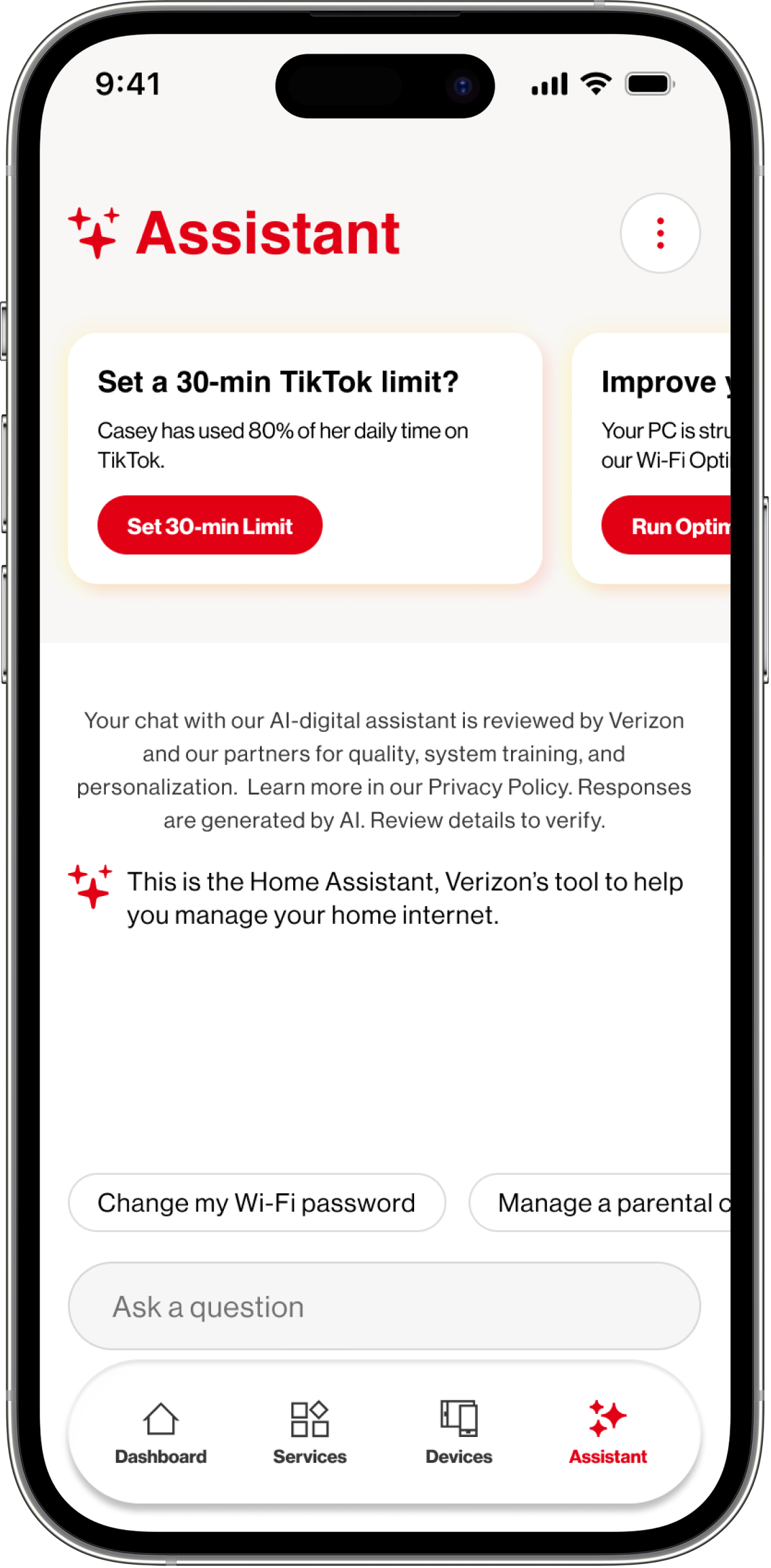
Advisor combines assistant, notifications, recommendations, search, and future AI capabilities into a single destination. This is where customers go when they need guidance, context, or answers.

01
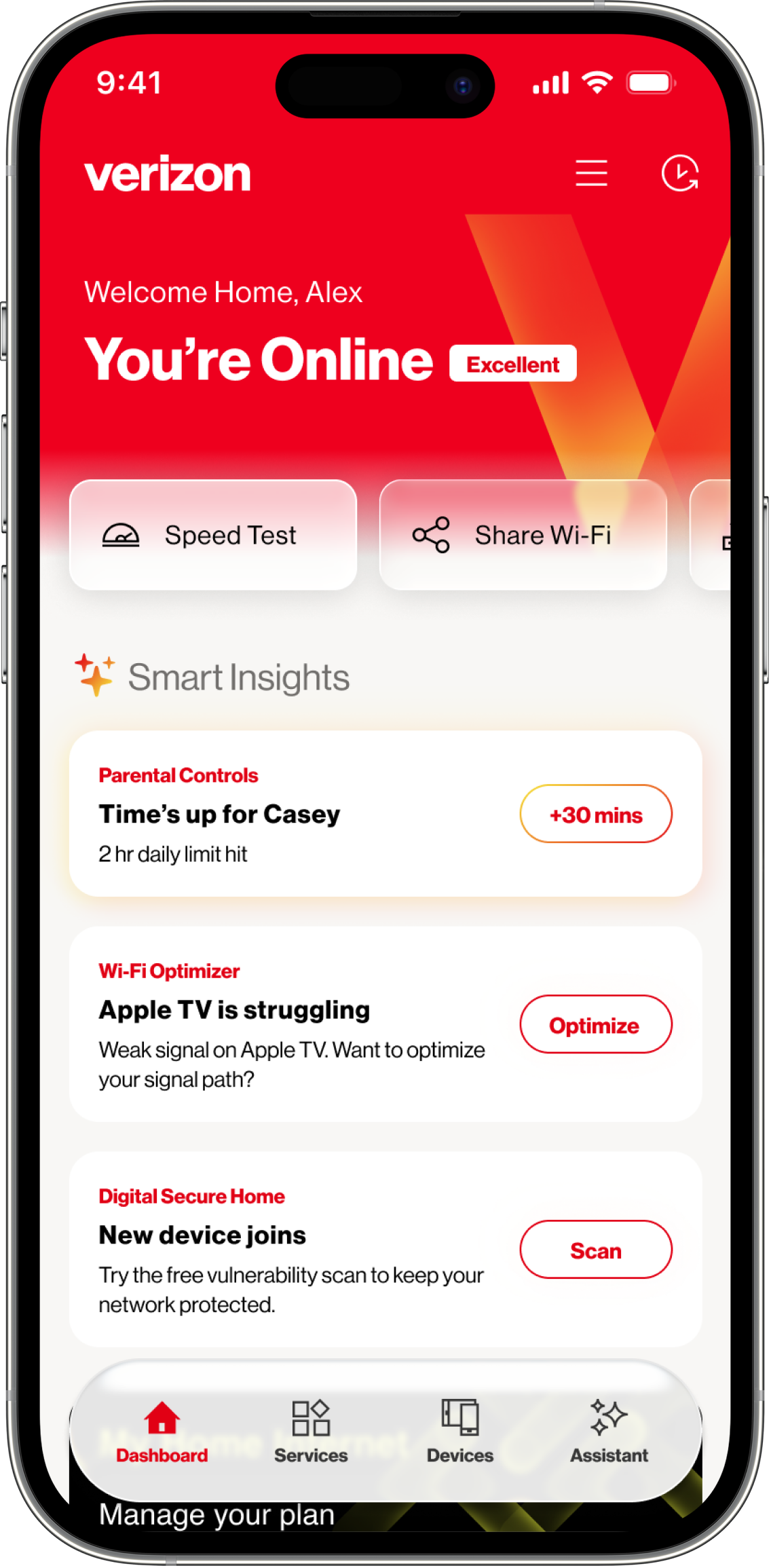
Home Dashboard

Awareness before action.

Customers don’t come looking for tools. They come because something matters.

The original product behaved like a toolbox. It expected customers to know what feature they needed, where it lived, and how to use it. Most people don’t think that way.

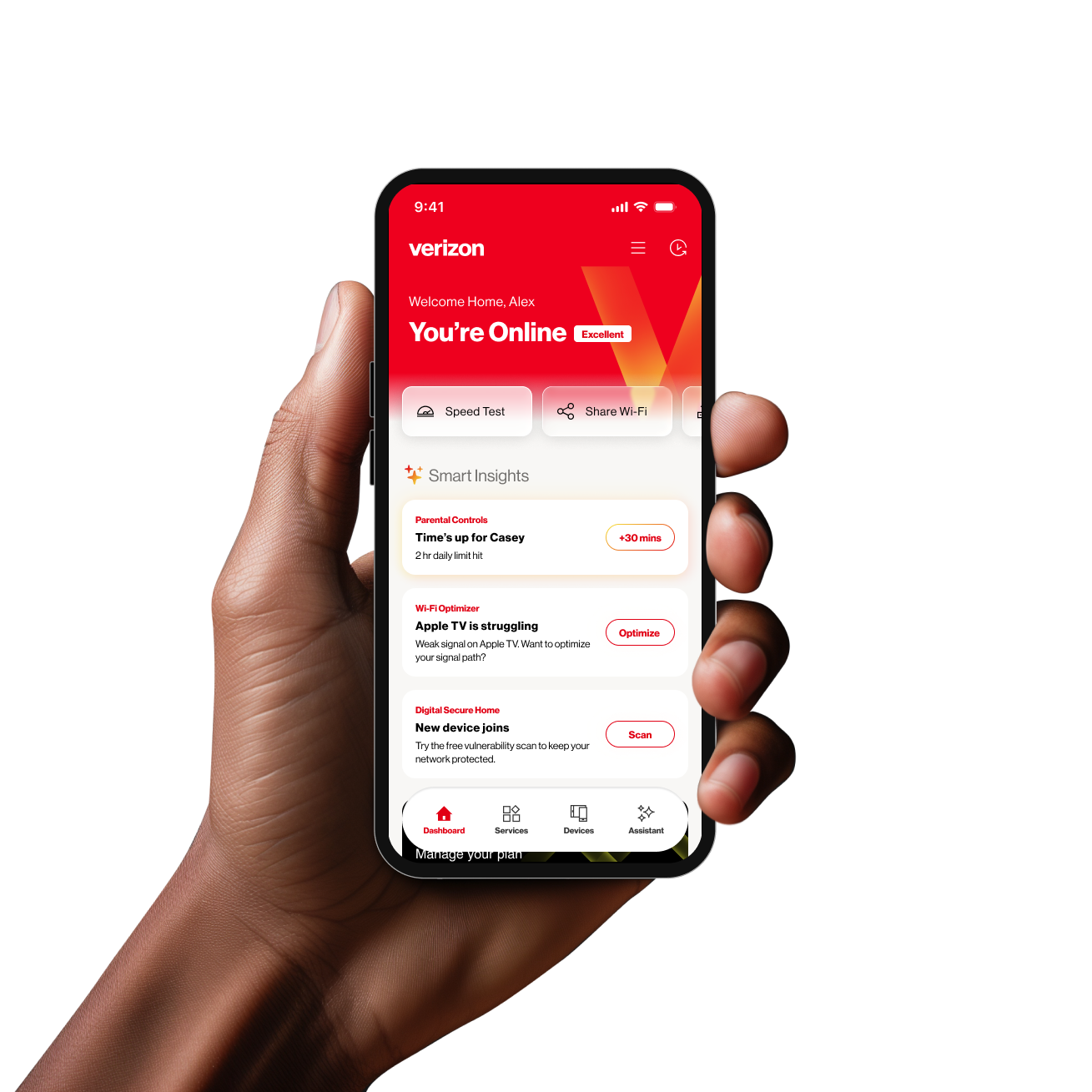
The Home Dashboard was redesigned as an attention layer. Instead of exposing features, it surfaces what needs action right now and provides the shortest path to resolution.

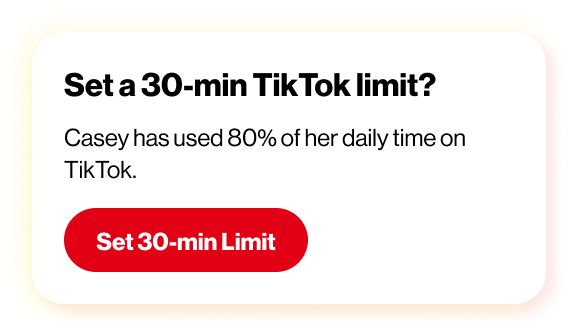
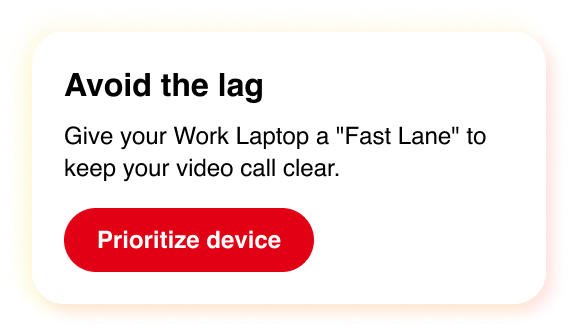
Every card is intentional. Every recommendation is actionable. If something doesn’t require attention, it stays out of the way.

The goal isn’t to help customers find the hammer. The goal is to hand them the hammer before they realize they need one.

Key Design Principles
  • Network health at a glance
  • AI-driven insights surface what matters now
  • One-tap resolution whenever possible
  • Progressive disclosure of complexity
  • Action over information
Verizon Home App — Home Dashboard screen
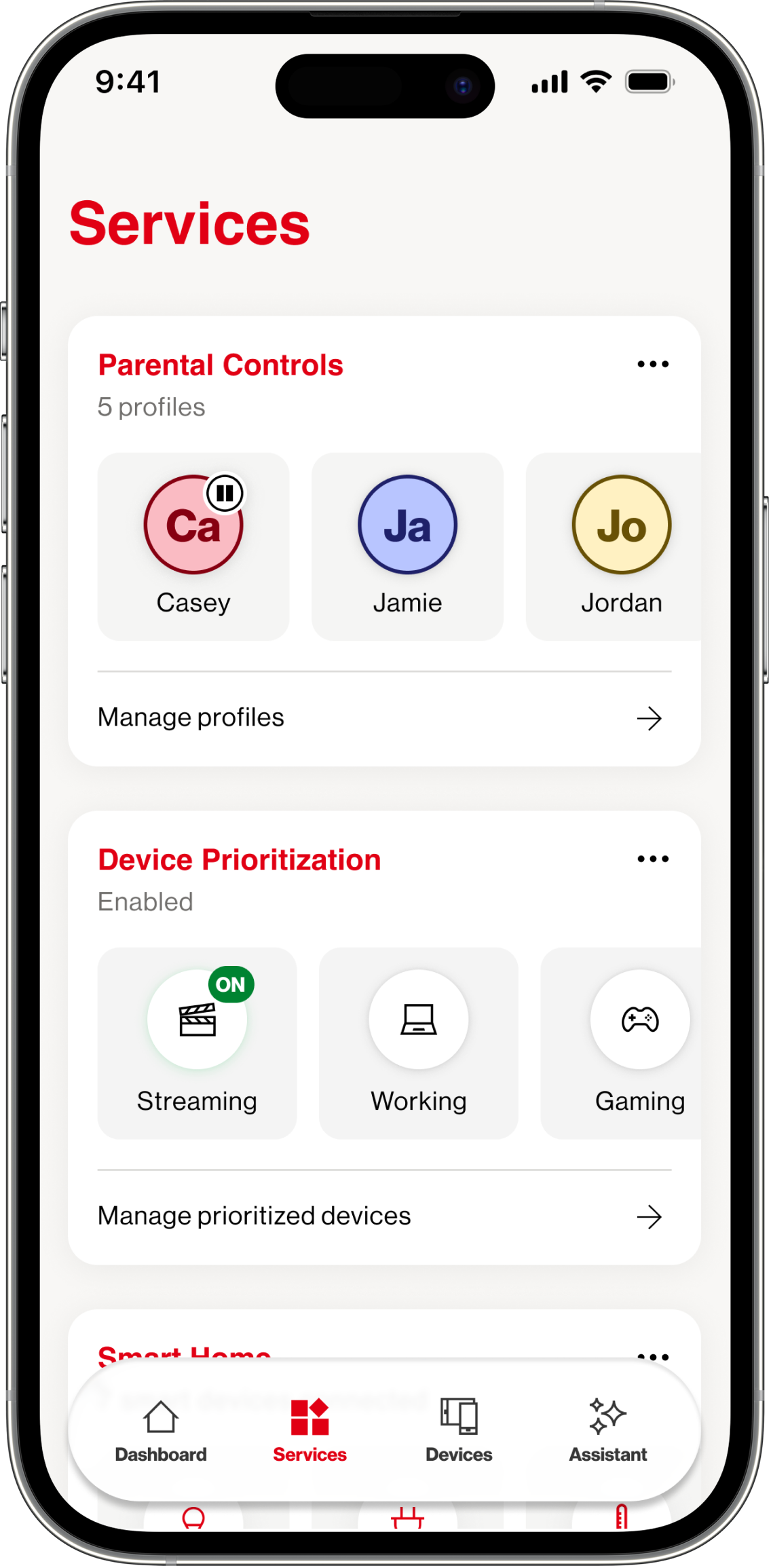
02
Services

Managing intent, not infrastructure.

Customers care about outcomes, not routers.

The Services layer reorganizes Verizon’s capabilities around customer goals.

Instead of configuring network settings, customers manage experiences like Safety, Entertainment, Security, and Performance. Services become understandable because they are framed around intent rather than technology.

This is also where Verizon’s ecosystem becomes visible. Customers can discover relevant capabilities based on household needs rather than generic promotions or disconnected upsell moments.

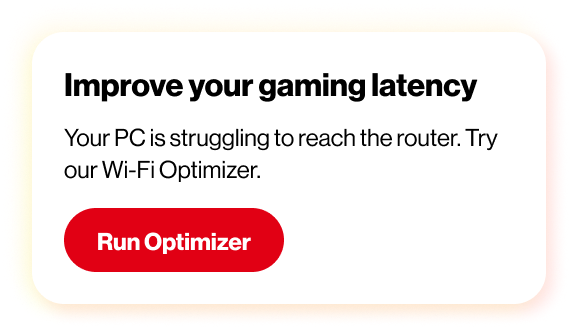
If gaming performance becomes a recurring issue, the right solution appears in context, at the moment it becomes useful.

Key Design Principles
  • Organize around goals rather than technology
  • Surface value before selling features
  • Contextual service discovery
  • Household-first mental model
  • Reduce technical complexity
Verizon Home App — Services screen
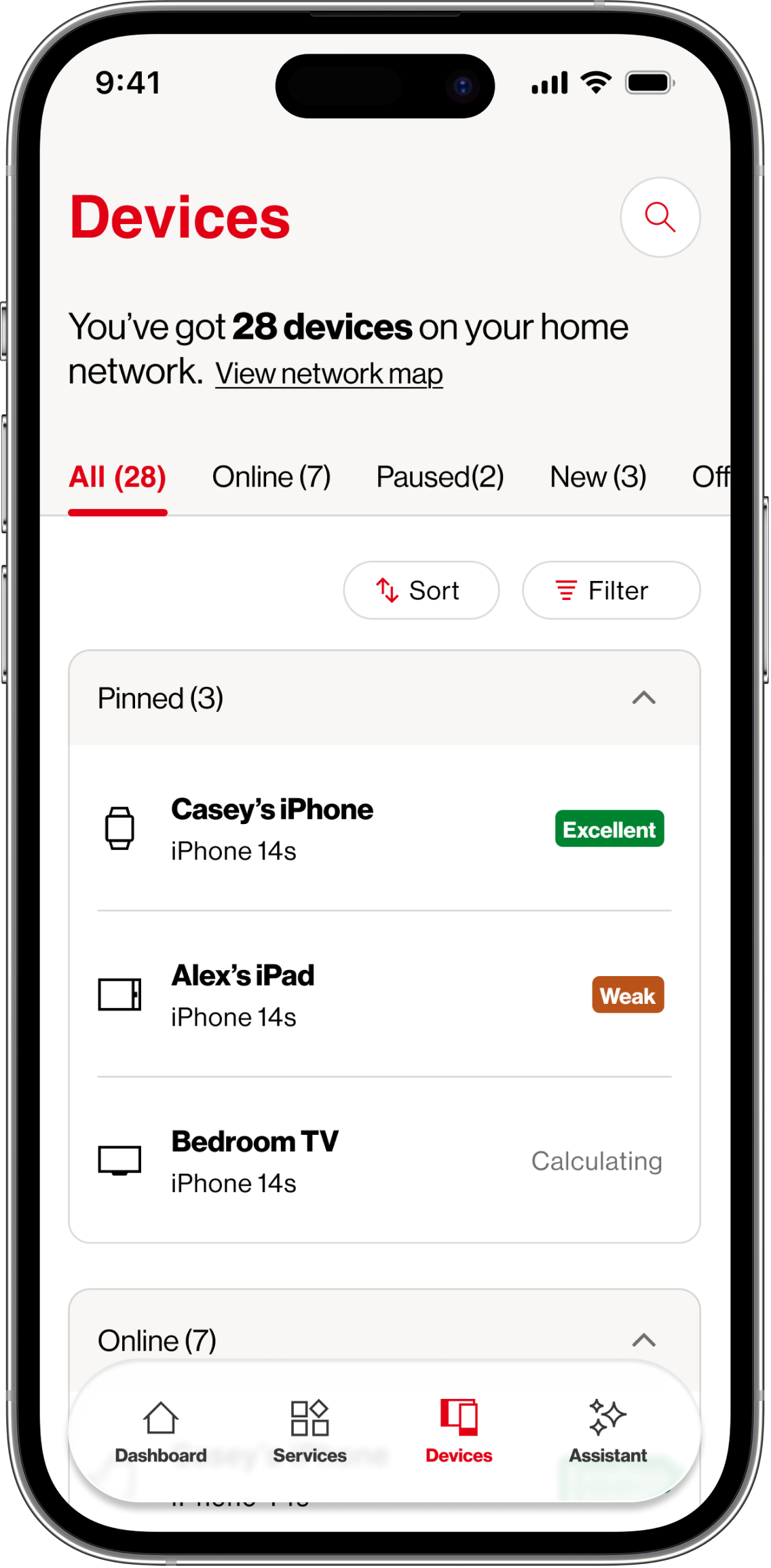
03
Devices

Every device has context.

A device list is inventory. A household model is understanding.

Most networking products present devices as a technical inventory of connected hardware. The redesign treats devices as part of a household system.

Instead of forcing customers to interpret MAC addresses and technical identifiers, devices are organized around people, activity, and relevance. Search, filtering, health indicators, and household grouping make the network understandable without requiring technical expertise.

The strategic decision was equally important. We intentionally excluded smart home device control. Verizon’s role is not to compete with thermostat manufacturers or smart home platforms.

Verizon owns the network layer that connects them all.

Key Design Principles
  • Organize devices around people
  • Health and relevance over technical metadata
  • Searchable and filterable at scale
  • Household-aware grouping
  • Focus on network intelligence
Verizon Home App — Devices screen
04
Home Advisor

The intelligence layer.

AI earns trust through relevance.

The Advisor is not a chatbot. It is the intelligence layer connecting network health, household behavior, services, and device activity into a single understanding of the home.

Most AI experiences begin with a conversation. Advisor begins with context. Instead of waiting for customers to ask questions, the system identifies meaningful moments and presents recommendations in plain language, with a clear next action.

The constraint that guided every decision was simple:

If a Verizon technician wouldn’t walk up to a homeowner and say it, the AI shouldn’t surface it.

This principle prevented noise, protected trust, and ensured every insight had a purpose.

Key Design Principles
  • Context before conversation
  • Proactive rather than reactive
  • Plain language over technical jargon
  • Every insight must lead to action
  • High relevance threshold
Verizon Home App — Home Advisor screen
Next Case Study

03 / BlueJeans by Verizon

From chaos to cadence — redesigning enterprise video collaboration at scale.

See the case study Back to portfolio