Operational transformation. Leadership. Systems organization. This chapter is about the execution, the unglamorous, high-leverage work of turning fragmentation into infrastructure.
Product vision. Ecosystem strategy. AI experience. Household intelligence. The pacing slows here intentionally, this chapter earns the breathing room.
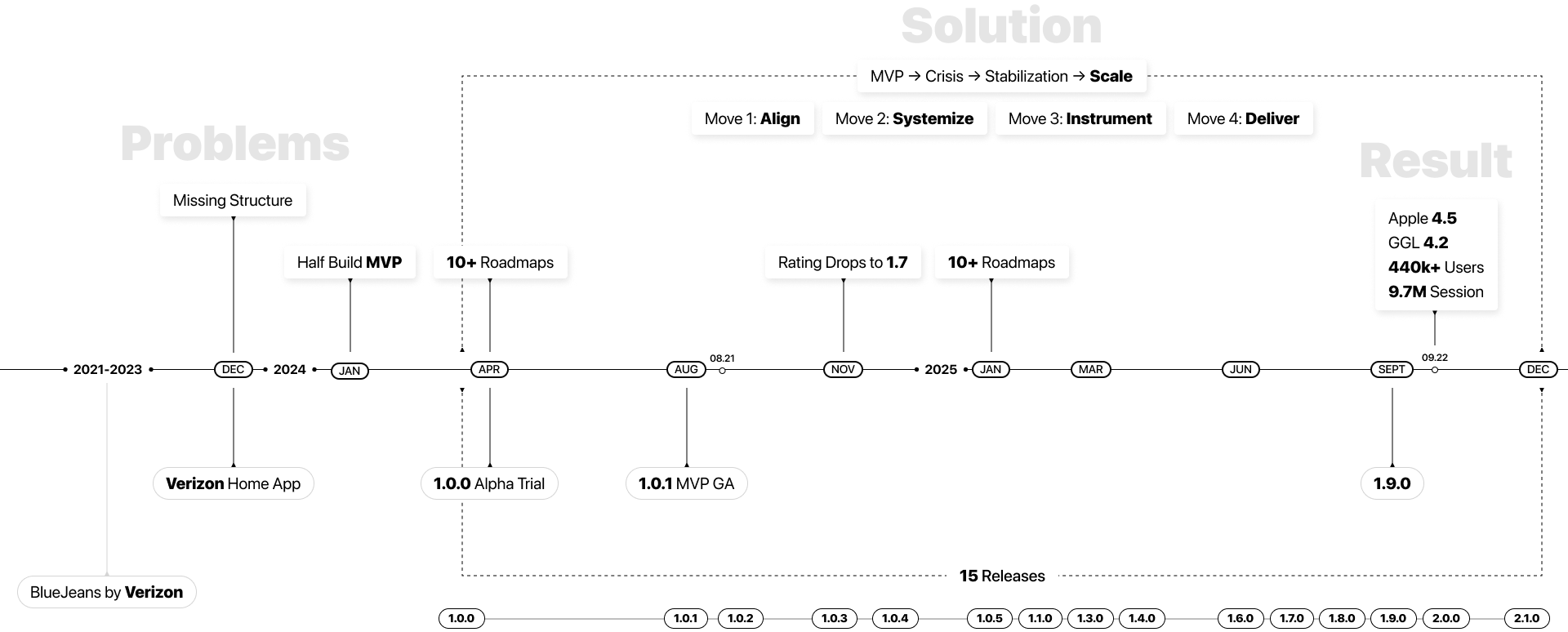
Jump to Chapter Two →Operational transformation. Leadership. Systems thinking. Before we could improve the experience, we had to improve the system creating it. This chapter follows four strategic moves that transformed fragmented teams, competing priorities, and inconsistent processes into a scalable operating model capable of supporting long-term product growth.
The challenges facing the Home App were not isolated issues. They formed a pattern. Fragmented execution slowed delivery. Misaligned priorities created competing directions. Missing customer signals made it difficult to know whether we were solving the right problems. Before the product could scale, these foundations needed to be addressed.
Handoff gaps and missing process slowed delivery.
Competing definitions of success across teams.
Solutions defined before problems were validated.
This was the moment I had to decide where I could create the most leverage. As a Principal Designer, my value was not only in producing design work, and not only in directing strategy from above. The team needed someone who could sit between craft and leadership, translating ambiguity into structure, connecting decisions across functions, and turning fragmented effort into shared momentum. I positioned myself in the overlap: close enough to the work to protect quality, and close enough to strategy to shape direction.
The problems looked different on the surface, but they shared a common cause: a lack of alignment. To restore focus and create momentum, I developed a four-part transformation strategy. Each move built upon the last, turning fragmented efforts into a shared operating model capable of supporting both product quality and long-term growth. Together, these moves created the foundation for every improvement that followed.
The goal was never to ship more features. It was to create a product organization capable of delivering consistently, learning continuously, and growing sustainably. These outcomes reflect the cumulative impact of that foundation.
Operational transformation. Leadership. Systems organization. This chapter is about the execution, the unglamorous, high-leverage work of turning fragmentation into infrastructure.
← Jump back to Chapter OneProduct vision. Ecosystem strategy. AI experience. Household intelligence. The pacing slows here intentionally, this chapter earns the breathing room.
The goal of this effort was not to redesign the Home App. It was to understand what the Home App should become. By examining customer behavior, business objectives, and product adoption patterns, we uncovered three fundamental challenges that were limiting the product’s long-term potential. These insights ultimately reshaped how we thought about value, success, and the role Verizon could play in the connected home.
Customers opened the app when something broke, then left as quickly as possible.
The team knew what to measure. We didn’t know what mattered.
Customers couldn’t benefit from tools they didn’t know existed.
The Home App had to serve two missions at once: create meaningful value for customers by becoming an Intelligent Home OS, and create strategic value for Verizon by becoming a primary gateway into the broader ecosystem.
Become the Intelligent Home OS for the modern household, leveraging the Verizon network to transform complex technology into a proactive, seamless environment where the home doesn’t just connect, it anticipates.
Serve as a primary gateway into the Verizon ecosystem, deepening trust and loyalty by transforming our network from a background utility into an essential, intelligent presence in every customer’s daily life.
Before defining features, I defined the principles. These became the decision filters used to evaluate every product direction, helping the team distinguish between what was merely possible and what was strategically valuable.
Utility products succeed quietly. High DAU is not the goal. Meaning per launch is. The app should be worth opening, not designed to be opened often.
Reliability builds emotional trust. The app should reach out when something matters, before the customer notices, before they call support.
Not gadget control. We do not compete with smart speakers or device manufacturers. We operate the intelligence layer, the layer they all depend on.
Privacy earns loyalty. Security should protect the household without burdening it. No paranoia. No alerts for non-issues. Competence that’s felt, not announced.
Churn prevention is a feeling. The app raises the bar for leaving by being genuinely useful, not by making leaving harder. Subtle loyalty is durable loyalty.
The household is the unit. Not the router, not the device. The household’s rhythms, needs, and vulnerabilities are what the system learns to understand.
Instead of “Why open the app?”, we ask: When should it speak first?
The app becomes essential by asking for less attention, not more.
The existing Home App was organized around Verizon’s feature inventory. Customers were expected to understand networking concepts, know which tool solved which problem, and navigate the product accordingly. But customers don’t think in features. They think in goals, frustrations, and outcomes. To support a more proactive experience, we first needed to restructure the information architecture around user intent. This shift not only simplified navigation, it created the foundation required for AI, automation, and household intelligence to operate across the entire experience.
At a glance. Not everything. What matters now.
The Home screen surfaces the most relevant information across the household, prioritizing awareness, recommendations, and proactive guidance over feature discovery.
Rules, automation, and household policies.
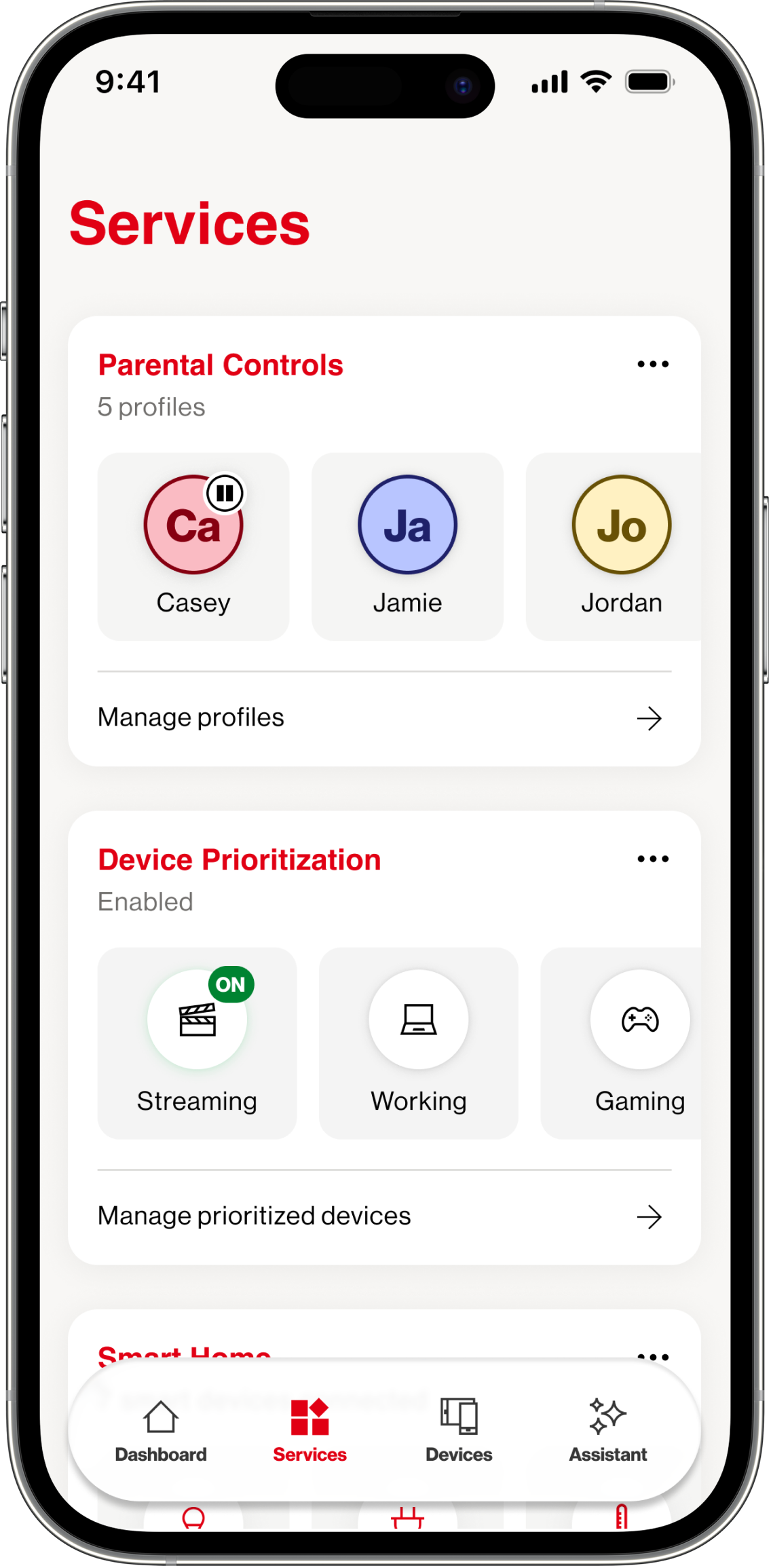
Services define how the home should behave. Parental controls, device prioritization, security, and future household experiences all live here because they establish rules that operate across devices.
The physical layer.
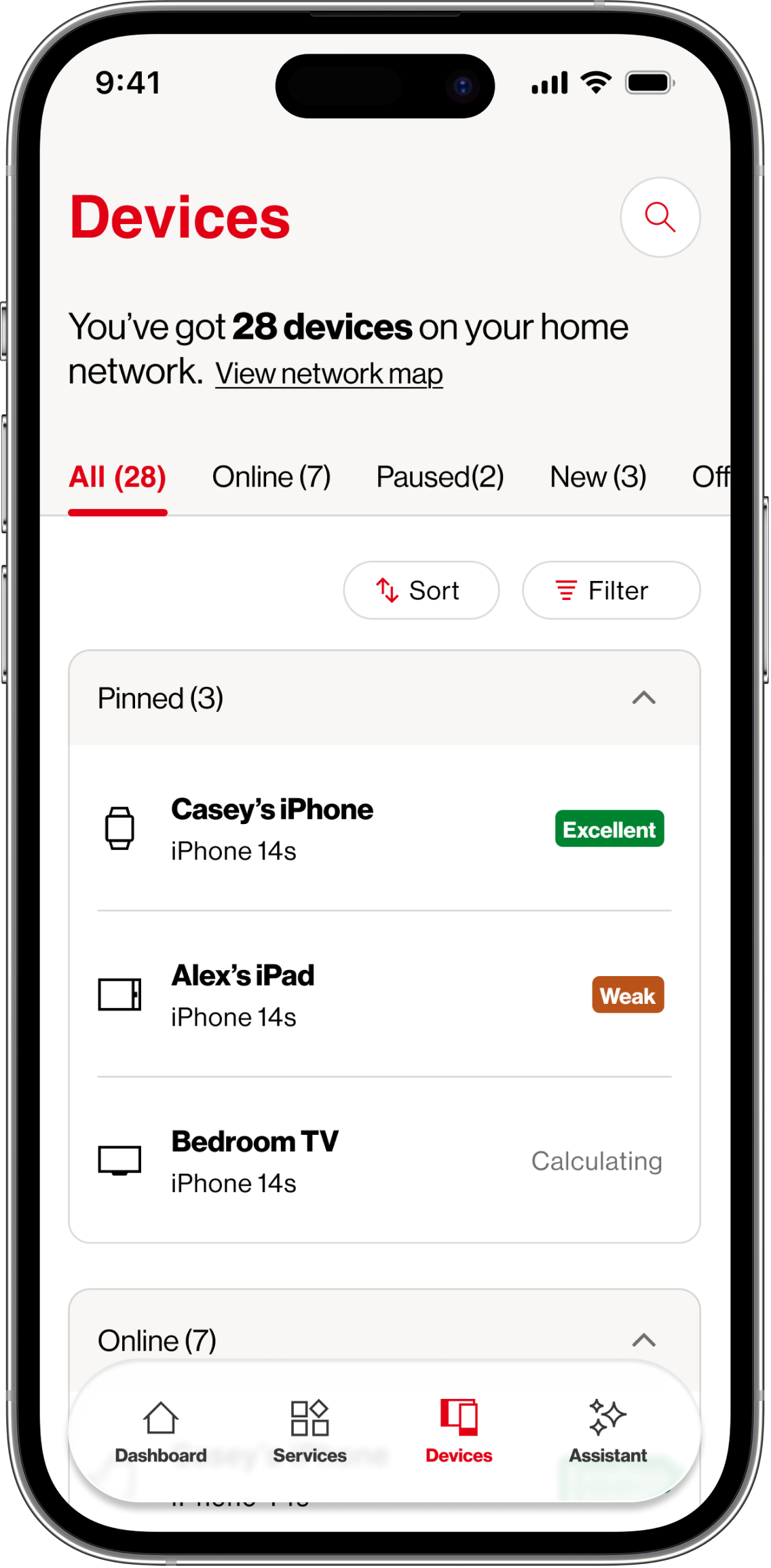
Devices are the inventory of everything connected to the network. This space exists for troubleshooting, diagnostics, and managing specific pieces of hardware when direct intervention is needed.
The intelligence layer.
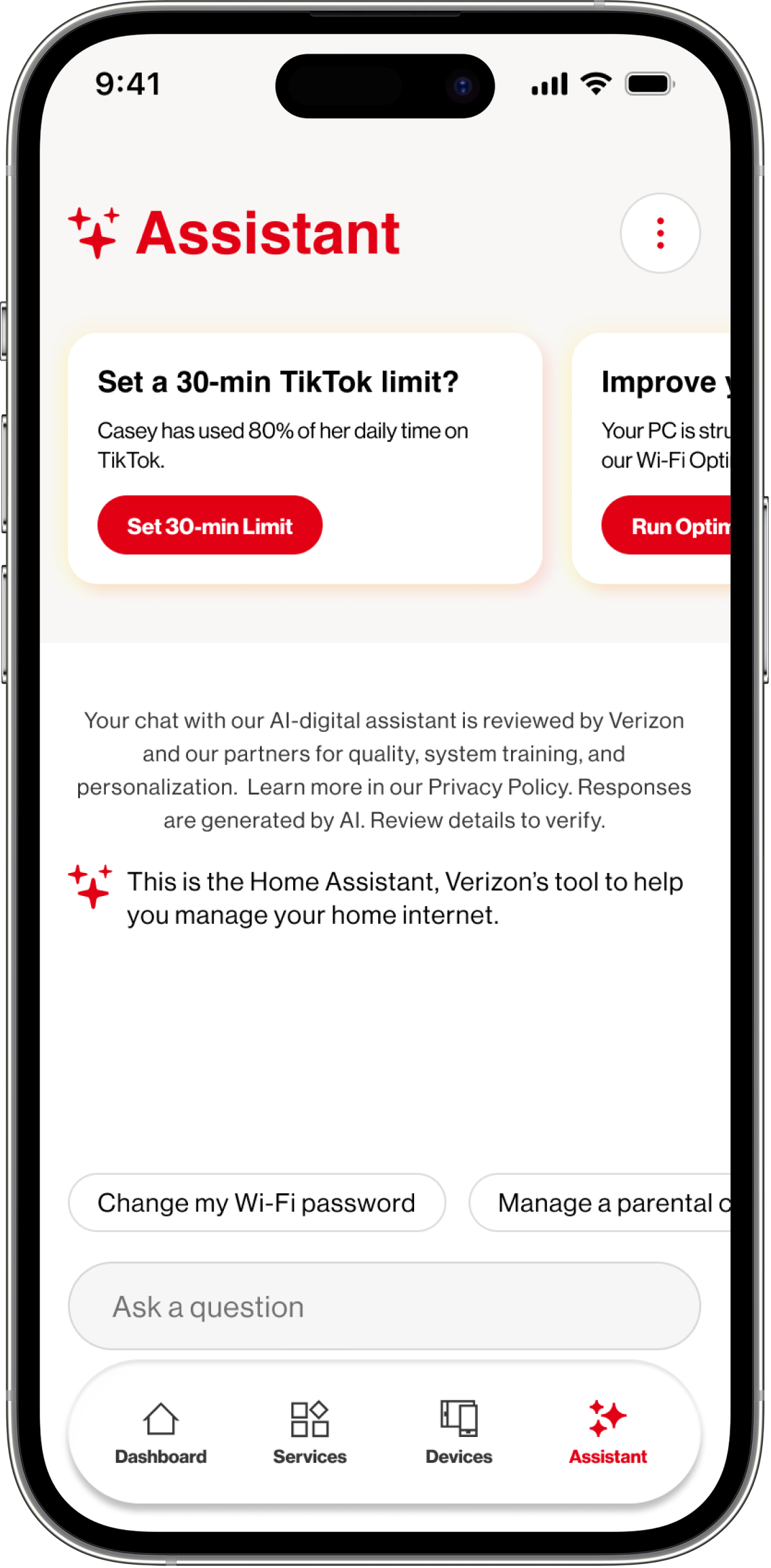
Advisor combines assistant, notifications, recommendations, search, and future AI capabilities into a single destination. This is where customers go when they need guidance, context, or answers.
Customers don’t come looking for tools. They come because something matters.
The original product behaved like a toolbox. It expected customers to know what feature they needed, where it lived, and how to use it. Most people don’t think that way.
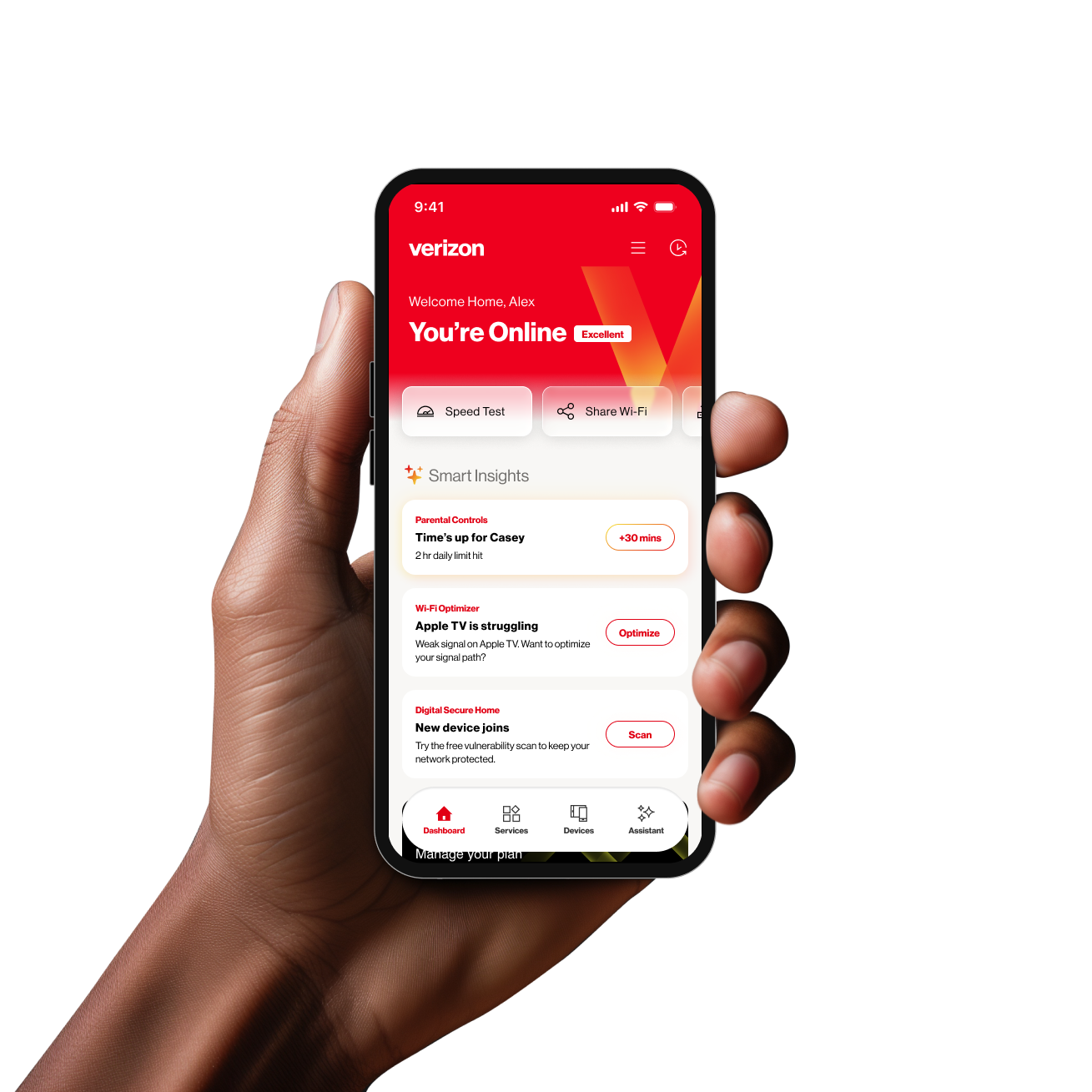
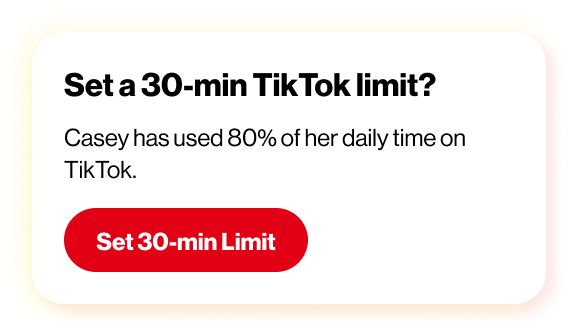
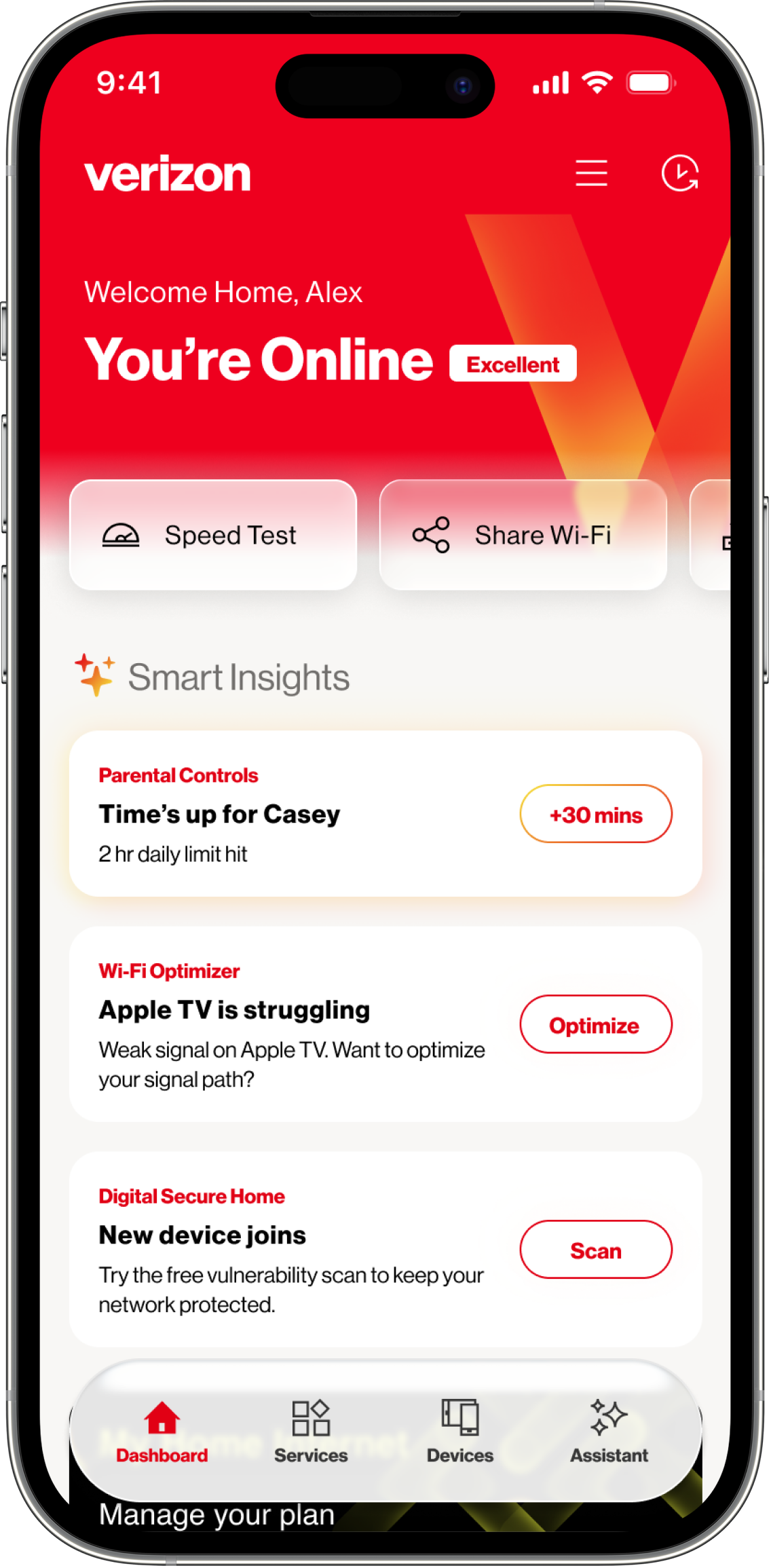
The Home Dashboard was redesigned as an attention layer. Instead of exposing features, it surfaces what needs action right now and provides the shortest path to resolution.
Every card is intentional. Every recommendation is actionable. If something doesn’t require attention, it stays out of the way.
The goal isn’t to help customers find the hammer. The goal is to hand them the hammer before they realize they need one.
Customers care about outcomes, not routers.
The Services layer reorganizes Verizon’s capabilities around customer goals.
Instead of configuring network settings, customers manage experiences like Safety, Entertainment, Security, and Performance. Services become understandable because they are framed around intent rather than technology.
This is also where Verizon’s ecosystem becomes visible. Customers can discover relevant capabilities based on household needs rather than generic promotions or disconnected upsell moments.
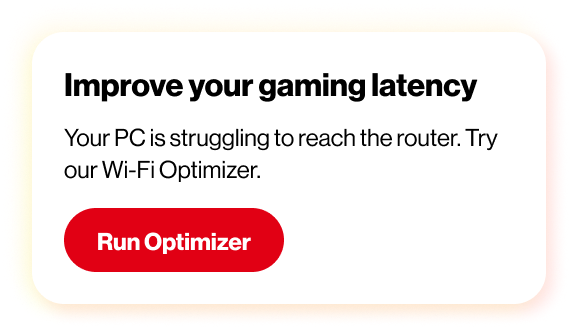
If gaming performance becomes a recurring issue, the right solution appears in context, at the moment it becomes useful.
A device list is inventory. A household model is understanding.
Most networking products present devices as a technical inventory of connected hardware. The redesign treats devices as part of a household system.
Instead of forcing customers to interpret MAC addresses and technical identifiers, devices are organized around people, activity, and relevance. Search, filtering, health indicators, and household grouping make the network understandable without requiring technical expertise.
The strategic decision was equally important. We intentionally excluded smart home device control. Verizon’s role is not to compete with thermostat manufacturers or smart home platforms.
Verizon owns the network layer that connects them all.
AI earns trust through relevance.
The Advisor is not a chatbot. It is the intelligence layer connecting network health, household behavior, services, and device activity into a single understanding of the home.
Most AI experiences begin with a conversation. Advisor begins with context. Instead of waiting for customers to ask questions, the system identifies meaningful moments and presents recommendations in plain language, with a clear next action.
The constraint that guided every decision was simple:
If a Verizon technician wouldn’t walk up to a homeowner and say it, the AI shouldn’t surface it.
This principle prevented noise, protected trust, and ensured every insight had a purpose.
From chaos to cadence — redesigning enterprise video collaboration at scale.